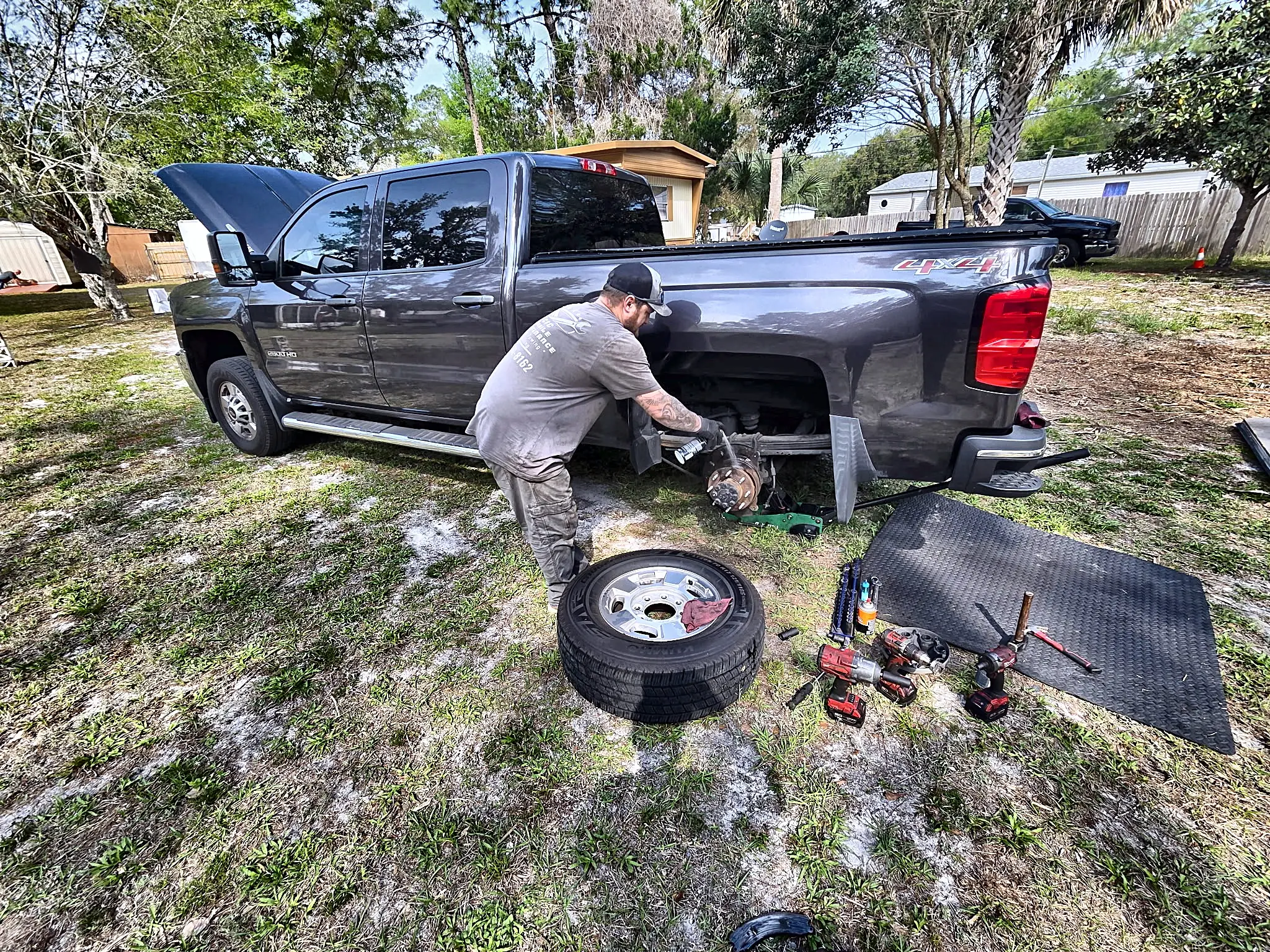
A nail in the tread doesn't automatically mean you need a new tire. But a gash in the sidewall does. The difference between a repair and a replacement comes down to where the damage is, how big it is, and whether the tire has enough life left to justify the patch. If you're standing in your driveway in Ocala looking at a flat, here's how to figure out what you're dealing with before you call anyone.
Tread Punctures vs. Sidewall Damage
The tread is the thick, grooved rubber that contacts the road. It's built to absorb impacts and resist punctures, and when something does get through, the tread area can usually be repaired. The industry-standard fix is a combination plug-patch applied from the inside of the tire. A plug alone (the kind you jam in from the outside with a kit from the auto parts store) is a temporary fix at best. A proper inside patch seals the hole and holds up for the remaining life of the tire.
The sidewall is different. That's the smooth section between the tread and the rim. The sidewall flexes constantly under load, bending every time the tire rolls. No patch or plug holds reliably on a surface that's in constant motion. A sidewall puncture, cut, or bubble means the tire gets replaced. There's no shortcut here.
The Size Rule
Even if the puncture is in the tread, size matters. The general standard most tire manufacturers and shops follow is that a puncture up to about a quarter inch (roughly 6mm) in diameter can be safely repaired. Anything larger, or anything that's torn rather than punctured, falls outside what a plug-patch can reliably seal.
Multiple punctures also change the math. Two small holes close together — within about 16 inches of each other — weaken the tread structure enough that a repair isn't recommended even if each hole individually qualifies. If your tire has already been patched once and picks up a second nail near the first, it's time for a new one.
How to Read Your Tire Wear
Even if the flat can be patched, it's worth checking how much tread you have left before paying for a repair on a tire that needs replacing anyway.
The simple test: stick a quarter into the tread groove with Washington's head pointing down. If the tread covers part of his head, the tire has usable life. If you can see the full head, the tire is at or below 4/32" of tread depth and should be replaced regardless of the flat.
Here's a rough guide to what tread depth means:
| Tread Depth | Condition | Action |
|---|---|---|
| 6/32" or more | Good — plenty of life | Repair the flat if it qualifies |
| 4/32" to 5/32" | Getting thin — still legal but reduced wet traction | Repair if you plan to replace soon anyway |
| 3/32" or less | Worn — reduced grip, especially in rain | Replace rather than repair |
| 2/32" (wear bars visible) | At the legal minimum | Replace immediately |
Florida rain hits hard and fast, especially summer afternoons in the Ocala area. Thin tread on wet pavement is where stopping distance doubles and hydroplaning risk spikes.
TPMS Lights and What They Actually Mean
If your dashboard shows a tire pressure warning light (the exclamation mark inside a horseshoe shape), it means at least one tire has dropped below the sensor's threshold, usually around 25% below the recommended pressure. It doesn't tell you which tire, and it doesn't tell you why.
A slow leak from a nail can trigger the TPMS days before the tire actually goes flat. If the light comes on and all four tires look normal, check the pressures with a gauge. A tire showing 5 to 10 PSI below spec likely has a slow puncture. A tire that's noticeably low or visibly sagging has lost more air and shouldn't be driven far.
Some older vehicles have indirect TPMS systems that infer pressure from wheel speed rather than using sensors in each tire. These are less precise and can throw false alerts after a tire rotation if the system isn't reset. A full diagnostic check can confirm whether the TPMS sensor itself needs attention or if the light is responding to an actual pressure drop.
Tire Rotation: The Maintenance Most People Skip
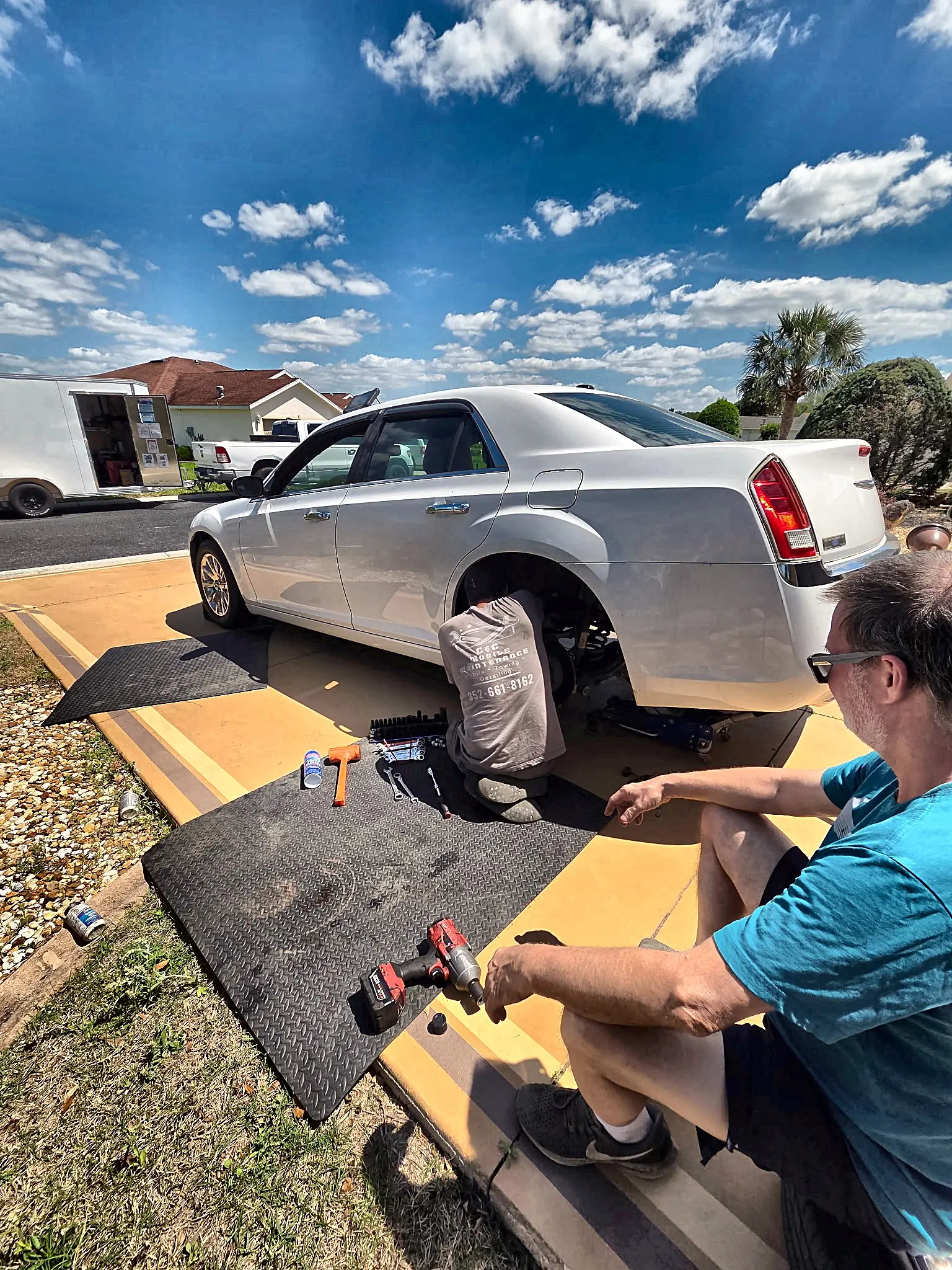
Rotating your tires every 5,000 to 7,500 miles evens out the wear pattern across all four tires. Front tires on a front-wheel-drive vehicle wear faster because they handle steering, braking, and power delivery. Without rotation, you end up replacing fronts twice as often as rears.
Most people skip it because it means a trip to the shop. With mobile service, the mechanic brings the equipment to your driveway and handles the rotation, balancing, and pressure check in one visit. That's one of the reasons mobile tire repair in Ocala makes more sense than most people expect for routine tire work, not just flats.
What Mobile Tire Repair Actually Covers
A mobile tire service isn't limited to plugging a hole. A fully equipped truck can handle flat repairs, new tire installs, tire rotations, wheel balancing, and TPMS resets right at your location. The mechanic brings a portable balancer and mounting equipment, so the result is the same as a shop visit without the drive or the wait.
C&C Mobile Maintenance handles mobile tire repair service across Ocala, Belleview, Summerfield, The Villages, Dunnellon, Lady Lake, and Silver Springs Shores. Whether it's a flat in the driveway, a set of new tires you ordered online, or a rotation you've been putting off, they bring the tools and handle it on-site. All tire work is backed by a 24-month / 24,000-mile warranty.
You can also see the full list of auto repair services C&C offers if your vehicle needs more than just tires.
FAQ
Book your service in about a minute.
Pick a service and a time — we'll come to you.