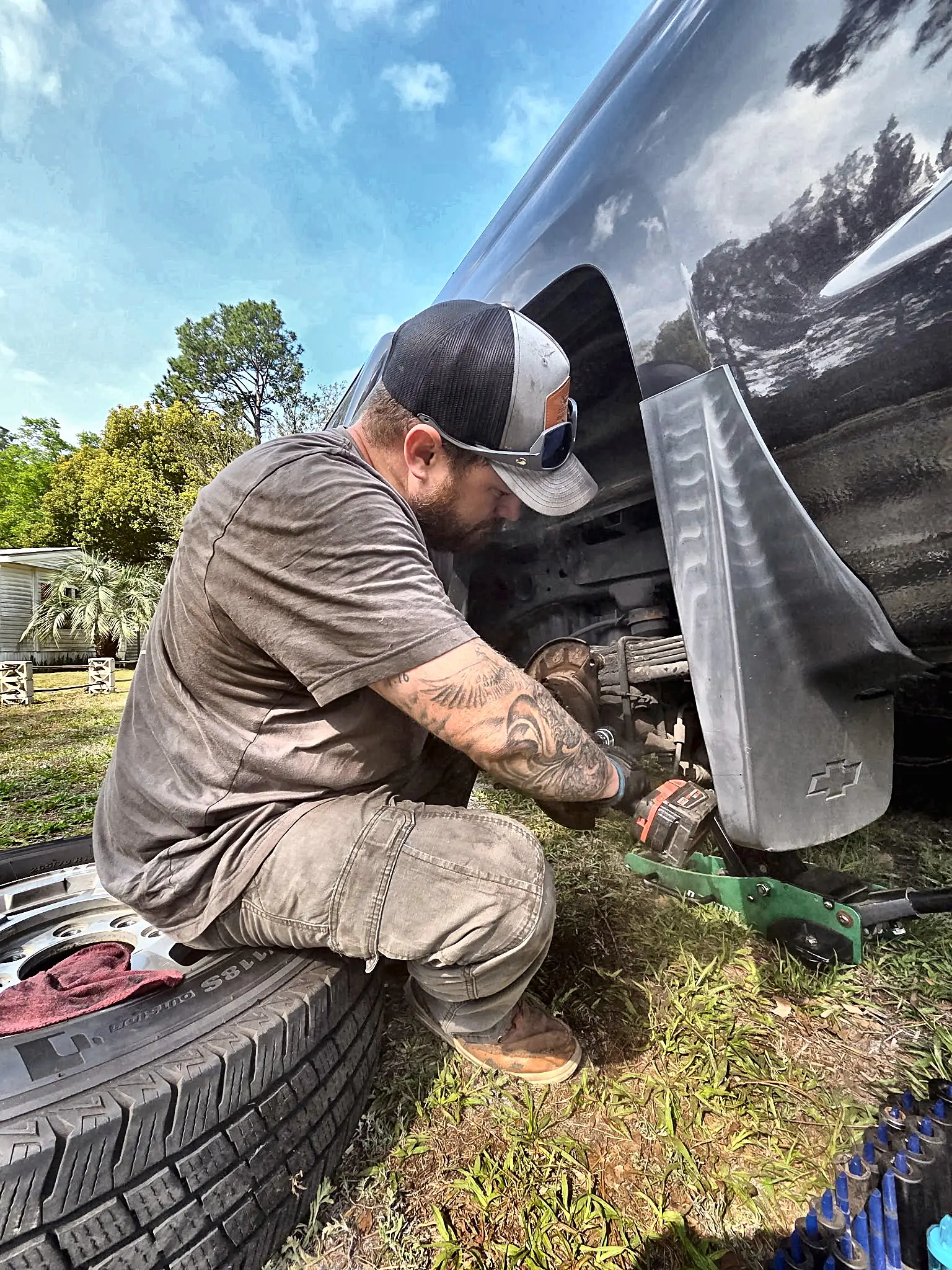
Most auto repair in Ocala happens inside a shop with a lift, a waiting room, and a day blocked off your calendar. But a growing number of jobs don't actually need any of that. If the vehicle can be safely worked on from underneath using a jack, or the repair is entirely under-hood or wheel-based, a mobile mechanic can do it right where the car sits. The question isn't whether mobile repair works. It's knowing which repairs qualify.
Here's a practical breakdown of what gets done in driveways every day, what occasionally needs a shop, and how to tell the difference.
Repairs That Work Great On-Site
These are the jobs where a mobile mechanic has everything needed on the truck, and the driveway or parking lot gives enough room to work safely.
Brakes. Pad and rotor replacements are one of the most common mobile repairs. The mechanic jacks the vehicle, pulls the wheel, swaps the pads and rotors, bleeds the lines if needed, and reassembles. No lift required. A mobile brake repair typically takes 1 to 2 hours per axle.
Tires. Flat repairs, new tire installs, rotations, and balancing can all be done on-site with portable equipment. Mobile tire balancers use optical technology that works just as well as the bolted-down shop versions. C&C handles full tire repair including TPMS resets.
Oil changes. This is the job most people picture when they think of a quick-lube place, but it's simpler to do in a driveway. Drain the old oil, swap the filter, refill with the correct weight, and dispose of the used oil properly. C&C does oil changes matched to your vehicle's specs, not a one-size-fits-all pour.
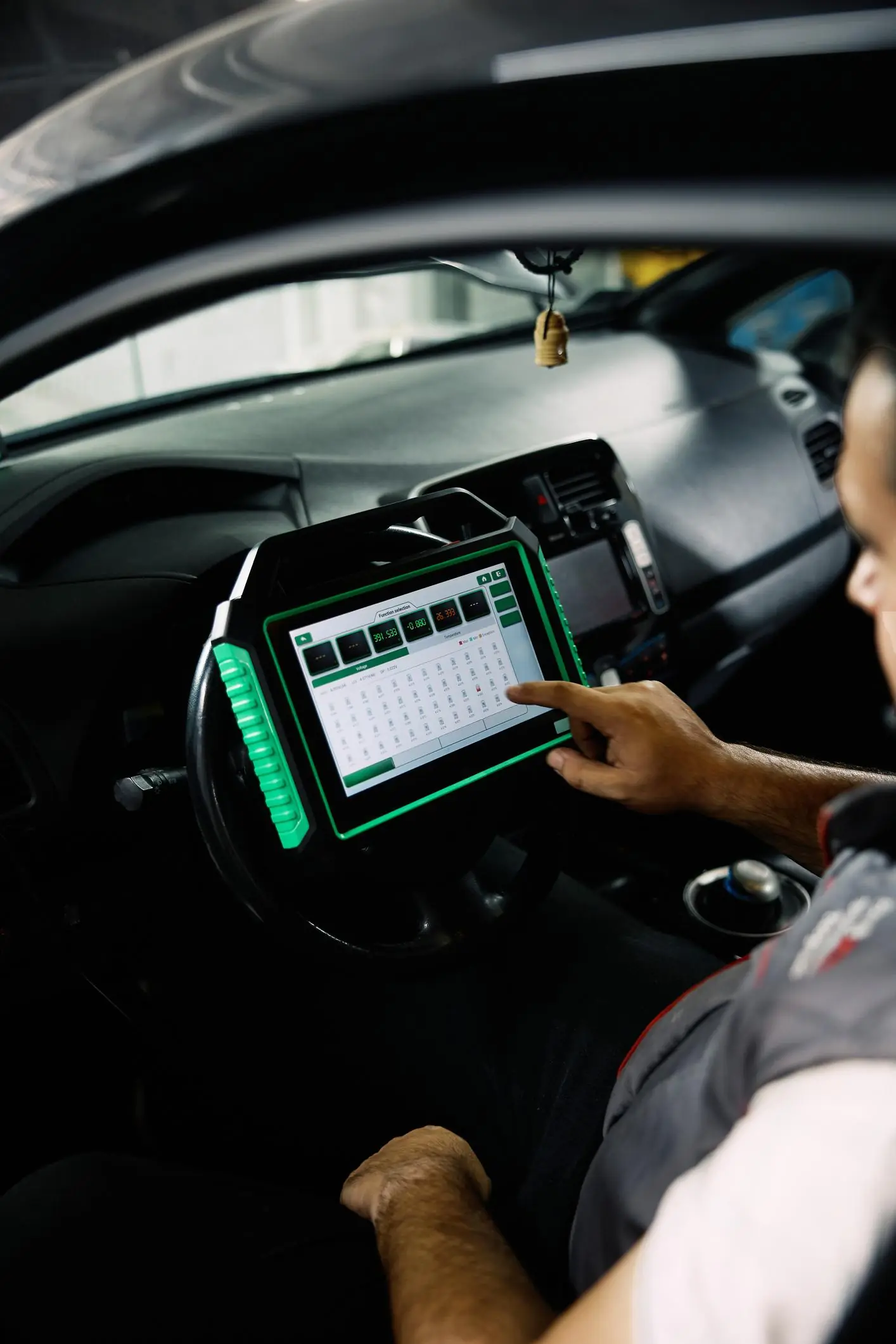
Diagnostics. OBD-II scanners, multimeters, and manufacturer-specific scan tools all run fine on a truck's battery. A mobile mechanic can read codes, test circuits, and trace electrical issues right in your driveway. Often the diagnosis and the fix happen in the same visit.
Starters and alternators. Both are under-hood or under-vehicle components accessible with basic tools and a jack. Swapping a starter usually takes 1 to 3 hours depending on the vehicle, and an alternator is similar. Neither needs a lift.
A/C systems. Evacuating and recharging a vehicle's A/C system, testing for leaks, and replacing compressors or condensers can be done on-site with the right recovery machine and gauges. In central Florida, A/C repair is one of the most requested mobile services — nobody wants to drive to a shop in August with no cold air.
Battery replacement. One of the fastest mobile jobs. Test the old battery, install the new one, reset the clock and radio presets. Done in 30 minutes.
Belts and hoses. Serpentine belts, coolant hoses, and heater hoses are all accessible under the hood. A belt replacement on most vehicles takes under an hour.
Repairs That Sometimes Need a Shop
A few jobs fall in a gray area where the vehicle model determines whether it's a mobile-friendly repair or a shop job.
Suspension components. Replacing struts, shocks, ball joints, and control arms can often be done with a jack and jack stands, but some vehicles have compressed spring assemblies that require a spring compressor bolted to a workbench. Your mechanic will know before showing up whether your vehicle's setup is driveway-safe.
Fuel pumps. On vehicles with an in-tank fuel pump accessed through a panel under the rear seat, this can be done on-site. On vehicles where the tank has to be dropped from underneath, it's easier and safer on a lift.
Some engine work. Head gaskets, timing chains, and valve cover gaskets are under-hood jobs that a mobile mechanic can handle if the workspace is adequate. More involved work like full engine rebuilds can be done mobile, though the timeline is longer and may span multiple visits.
Repairs That Need a Lift or a Shop
A few categories of work genuinely require equipment that doesn't travel.
Wheel alignments. Alignment machines are large, floor-mounted units that measure all four wheels simultaneously. There's no portable version that matches the precision of a shop alignment rack. If you need an alignment after new tires or suspension work, that's a shop visit.
Transmission removal and rebuild. Diagnosing transmission problems, doing fluid services, and replacing external sensors can happen on-site. But pulling the transmission out of the vehicle for a rebuild requires a lift and a transmission jack. C&C does on-site transmission work for diagnosis and service, and will be straight with you if the job requires a shop.
Frame and body work. Structural repairs, welding on frame rails, and body panel work need a controlled environment. Mobile mechanics handle the mechanical side, not collision repair.
The Diesel Side
Diesel trucks and equipment add another layer. Many diesel repairs — injector replacement, turbo work, fuel system diagnosis, glow plug swaps — can be done on-site. The advantage of mobile diesel repair is that diesel trucks are harder to get to a shop in the first place. A dually that won't start isn't going on a flatbed easily.
C&C Mobile Maintenance works on both gas and diesel vehicles, plus golf cart repair across the Ocala and Villages market.
How to Decide: Mobile or Shop?
Ask two questions. First: does this repair need a lift, or can it be done safely with a jack? If a jack works, mobile works. Second: is the repair contained to one system (brakes, engine, electrical, cooling), or does it need the whole vehicle disassembled? Single-system repairs are almost always mobile-friendly.
C&C Mobile Maintenance handles auto repair services across Ocala, Belleview, Summerfield, The Villages, Dunnellon, Lady Lake, and Silver Springs Shores. They'll tell you upfront whether your job is a driveway repair or a shop referral, and they won't charge you for the honesty.
Give them a call and describe what's going on — they'll tell you the next step.
FAQ
Book your service in about a minute.
Pick a service and a time — we'll come to you.